Total Knee Replacement in Thailand | Bilateral Knee Surgery
Last updated: 23 Sept 2026
21 Views
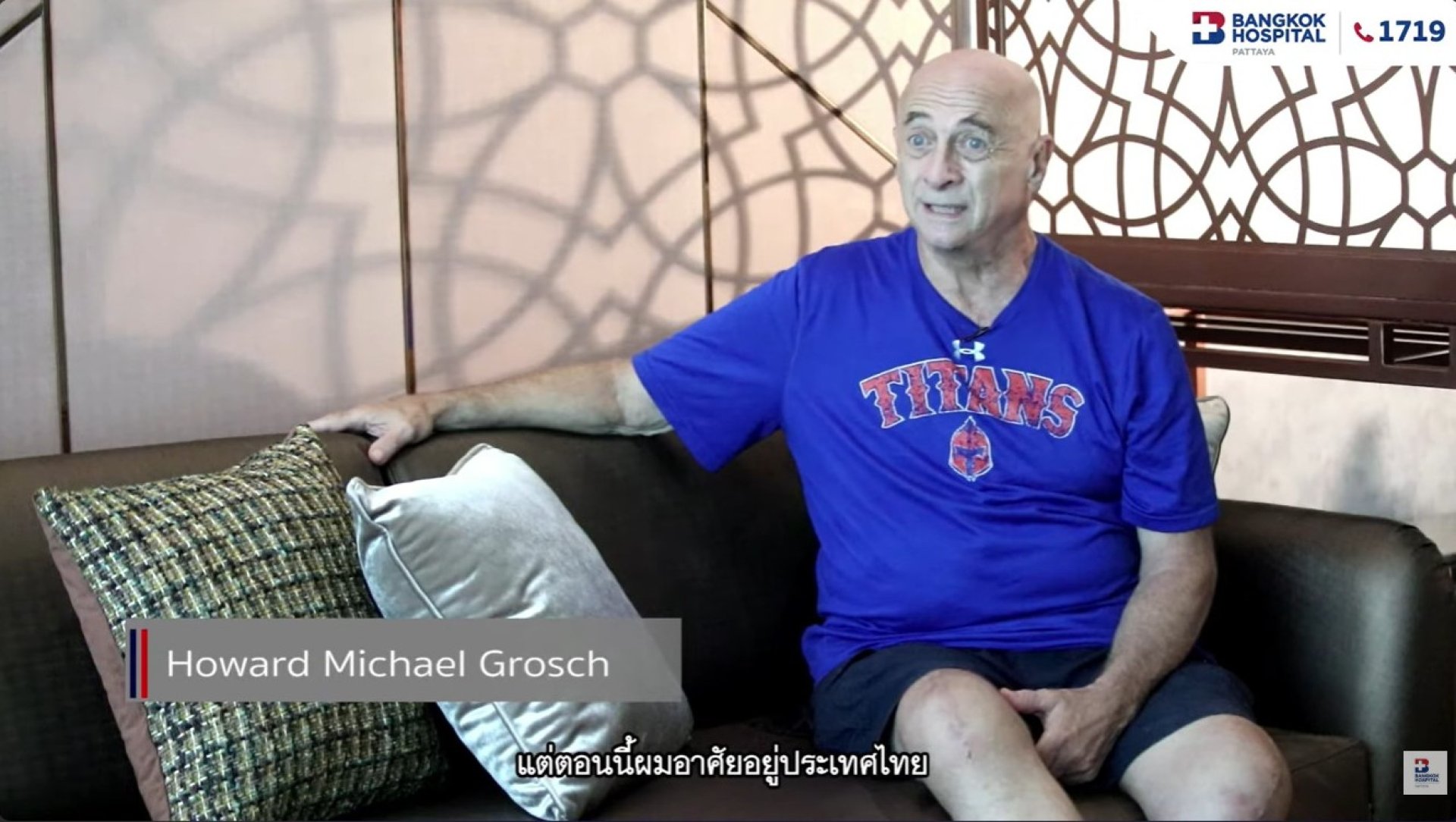
Total Knee Arthroplasty in Thailand: A Patient’s Journey Through Simultaneous Bilateral Knee Replacement
“If I Have to Sit at Home Because I Can’t Walk, For Me… That’s Not Living.”
For people living with severe or long-standing knee problems, difficulty walking can affect far more than physical mobility. Everyday activities, independence, travel and quality of life can all become increasingly difficult.
For one Canadian patient featured in this case, a long-standing knee injury dating back to his ice-hockey days had eventually made walking increasingly difficult. Faced with a lengthy wait for medical treatment in Canada, he decided to explore treatment in Thailand.
His experience at Bangkok Hospital Pattaya led to a decision to undergo simultaneous bilateral total knee replacement surgery—replacing both knee joints during the same surgical episode.
The patient subsequently underwent rehabilitation and physical therapy and reported that he was able to walk again and return to his normal activities.
What Is Total Knee Arthroplasty?
Total knee arthroplasty (TKA), commonly called total knee replacement, is a surgical procedure used to replace damaged portions of the knee joint with artificial components.
It may be considered when severe knee disease or damage causes persistent pain, stiffness and difficulty with everyday activities and when non-surgical treatments no longer provide sufficient relief.
The decision to undergo knee replacement depends on factors such as the patient's symptoms, joint damage, overall health and functional limitations.
What Is Simultaneous Bilateral Knee Replacement?
When both knees require replacement, there are generally two approaches:
- Simultaneous bilateral knee replacement: both knees are replaced during the same surgical episode.
- Staged bilateral knee replacement: one knee is replaced first, followed by the other at a later date.
Simultaneous surgery can mean that both knees are treated during one hospitalisation and one overall surgical episode. However, it is not appropriate for everyone.
Recent systematic reviews have found that simultaneous and staged bilateral knee replacement have different risk profiles. Some large analyses have reported higher rates of certain complications with simultaneous surgery, while functional outcomes can be broadly comparable. Patient selection and careful medical assessment are therefore important.
A Canadian Patient Looks to Thailand for Treatment
The patient in this case had suffered a knee injury while playing ice hockey in Canada.
Over time, his knee problems significantly affected his ability to walk and live normally. According to the patient, waiting for treatment in Canada could take approximately five years.
Having previously visited Thailand and developed a strong connection with the country, he decided to explore treatment at Bangkok Hospital Pattaya.
His objective was straightforward: regain mobility and return to an active life.
“If I have to sit at home because I can't walk, for me…that's not living.”
This statement reflects an important aspect of joint replacement: for many patients, the goal is not simply to address a damaged joint but to improve mobility and participation in everyday life.
Choosing to Replace Both Knees at the Same Time
The patient specifically wanted both knees treated during the same surgical episode.
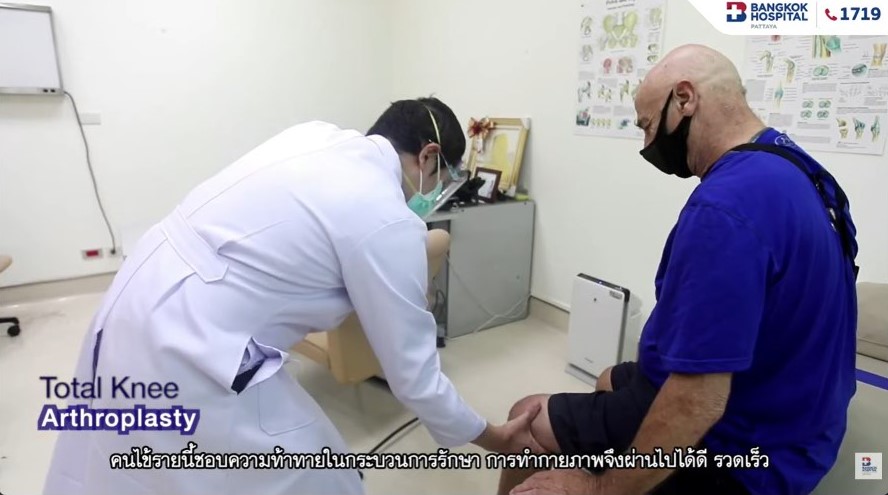
His treatment involved simultaneous bilateral total knee arthroplasty, performed in collaboration with the patient and Dr. Nammon Yai-kaewong, a specialist in orthopaedic surgery and joint replacement at the Orthopaedic Surgery Centre, Bangkok Hospital Pattaya.
Whether simultaneous surgery is appropriate must be determined individually. Doctors generally need to evaluate the patient's overall health, medical history, knee condition and ability to undergo a bilateral procedure.
The approach should therefore be based on medical assessment rather than simply on the desire to complete both operations at once.

Recovery After Bilateral Knee Replacement
Following surgery, rehabilitation and physical therapy are important parts of recovery.
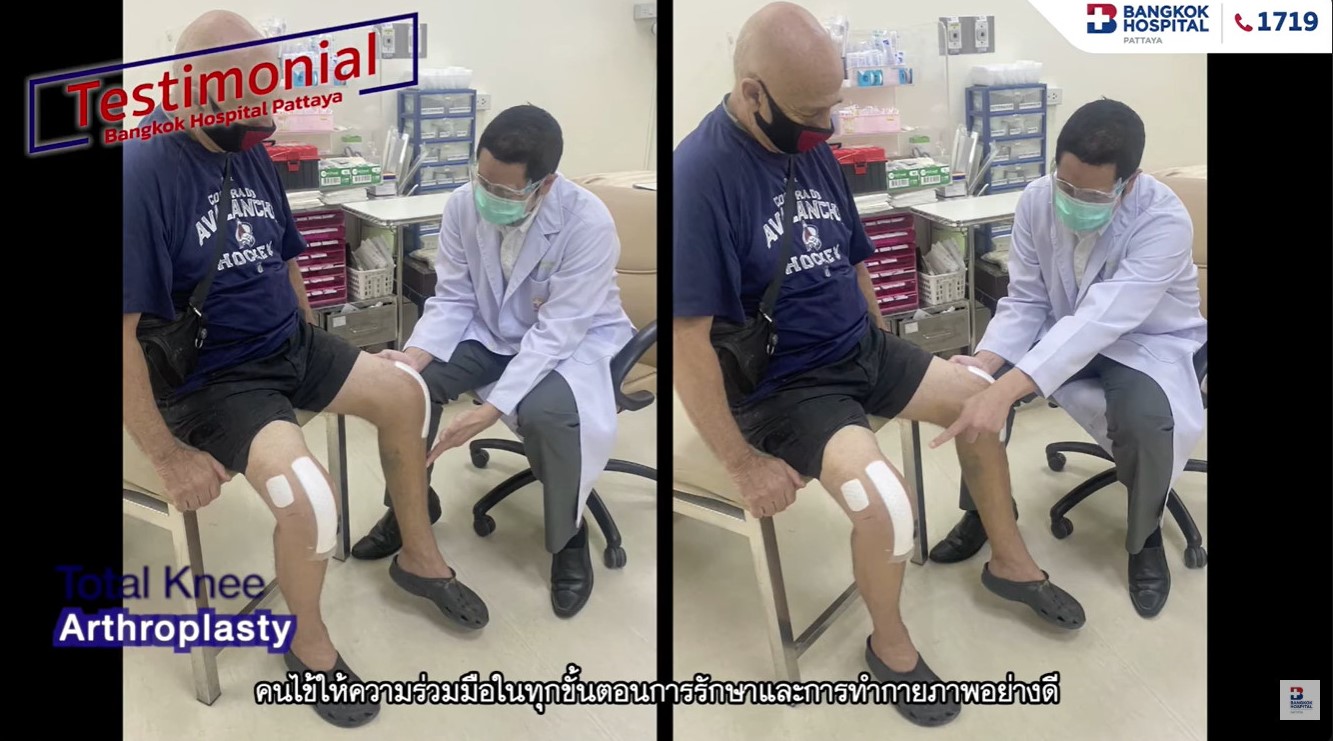
In this patient's case, he worked diligently on his rehabilitation and physical therapy. According to the video testimonial, his recovery progressed well, allowing him to walk again and return to his normal life.
Recovery after knee replacement varies considerably between individuals. Factors can include age, general health, muscle strength, the condition of the knees before surgery, surgical technique and commitment to rehabilitation.
A patient's experience should therefore be viewed as an individual case rather than a prediction of what every patient will experience.
Why Rehabilitation Matters
Knee replacement surgery is only one part of the recovery process.
After surgery, patients may need a structured rehabilitation programme involving:
- Physical therapy
- Mobility exercises
- Strengthening exercises
- Walking practice
- Range-of-motion exercises
- Follow-up appointments
- Gradual return to everyday activities
Working closely with the medical and rehabilitation team can help patients understand what activities are appropriate at each stage of recovery.
Could Thailand Be an Option for International Knee Replacement Patients?
Thailand has become an important destination for international patients seeking specialist medical care, including orthopaedic procedures.
For overseas patients considering knee replacement, the decision involves more than comparing surgical procedures. Patients may also need to consider:
- Orthopaedic specialist experience
- Hospital facilities
- Pre-operative assessment
- Surgical and anaesthesia arrangements
- Rehabilitation services
- Length of stay
- Post-operative follow-up
- Accommodation and transportation
- Travel arrangements after surgery
For patients travelling internationally, medical planning should always be coordinated with qualified healthcare professionals.
Simultaneous or Staged Knee Replacement: What Should Patients Know?
There is no single approach that is suitable for every patient.
Research comparing simultaneous and staged bilateral knee replacement continues to show different advantages and risks. A 2026 systematic review involving more than 5.8 million patients found that simultaneous bilateral TKA was associated with longer hospital stays and higher overall complication rates than unilateral TKA, while functional outcomes and quality-of-life measures were broadly comparable.
Other systematic reviews comparing simultaneous and staged bilateral procedures have also reported differences in complications, transfusion requirements and mortality, reinforcing the importance of careful patient selection.
For this reason, patients should discuss both approaches with an orthopaedic specialist rather than assuming that simultaneous surgery is automatically preferable.
A Patient's Journey Back to Mobility
The Canadian patient's experience demonstrates why mobility can be such an important goal for someone considering knee replacement.
After years of dealing with the consequences of an old injury, he travelled to Thailand, underwent simultaneous bilateral knee replacement and committed to his rehabilitation.
According to his testimonial, the outcome exceeded his expectations, and he was able to walk again and resume his normal life.
His story is one example of how orthopaedic treatment, patient commitment and rehabilitation can work together in the journey toward improved mobility.
Considering Knee Replacement in Thailand?
If chronic knee problems are affecting your ability to walk, work, travel or enjoy everyday activities, an orthopaedic evaluation can help determine which treatment options may be appropriate.
For international patients considering treatment in Thailand, ThaiCureo can help explain the medical travel process and connect patients with appropriate healthcare providers for further evaluation.
The first step should always be a professional medical assessment based on the patient's individual condition.
Conclusion
Total knee arthroplasty can be an important treatment option for patients with severe knee problems affecting mobility and quality of life.
For patients requiring treatment in both knees, simultaneous bilateral knee replacement is one possible approach, although it carries different risks and considerations compared with staged surgery.
The Canadian patient featured in this case chose simultaneous bilateral knee replacement at Bangkok Hospital Pattaya and, according to his testimonial, achieved a successful recovery with dedicated rehabilitation.
His experience highlights an important message: the patient and qualified orthopaedic specialists should determine the appropriate treatment plan through careful discussion.
Medical Disclaimer: This article is for educational purposes and describes an individual patient experience. It does not guarantee the same results for other patients. Suitability for knee replacement, and particularly simultaneous bilateral surgery, must be determined by qualified orthopaedic and medical professionals after individual assessment.
Summary
Background and Decision: Mr. Howard Michael Grosch, a retired PhD researcher from Canada living in Thailand, suffered joint damage from playing ice hockey. By age 65, severe knee degradation prevented him from running. Although double knee replacement was covered under Canada’s public healthcare, facing a 5-year waitlist prompted him to seek self-funded care in Thailand.
Background and Decision: Mr. Howard Michael Grosch, a retired PhD researcher from Canada living in Thailand, suffered joint damage from playing ice hockey. By age 65, severe knee degradation prevented him from running. Although double knee replacement was covered under Canada’s public healthcare, facing a 5-year waitlist prompted him to seek self-funded care in Thailand.
Simultaneous Bilateral Knee Surgery: Mr. Grosch insisted on undergoing bilateral total knee arthroplasty (replacing both knees at the same time) at Bangkok Hospital Pattaya, wanting to complete the full recovery process in a single procedure rather than returning for a second operation. He was deeply impressed by his surgeon's focus on his long-term safety and well-being over financial gain.
Rehabilitation and Rapid Recovery: Supported by a high pain threshold and active participation in physical rehab, he began standing within days of surgery. Guided by his surgeon's advice to monitor pain thresholds, he quickly progressed to walking, climbing stairs, and navigating ramps without pain.
Outcome and Quality of Life: Within three to four weeks post-operation, Mr. Grosch had fully regained mobility—walking with confidence, bending his knees beyond 90 degrees, and going on three-hour shopping trips. He emphasises that opting for timely joint surgery is a vital investment in restoring mobility and living a fulfilling life.
Recommended ThaiCureo Internal Links
Advanced Orthopaedic Treatments in Thailand
Orthopaedic Surgery in Thailand
Medical Tourism in Bangkok: A Complete Guide for Foreign Patients
Thailand Healthcare for International Patients
Rehabilitation & Recovery in Thailand
Why Thailand Is a Global Leader in Medical Tourism
Top Benefits of Choosing Thailand for Medical Treatment
Advanced Orthopaedic Treatments in Thailand
Orthopaedic Surgery in Thailand
Medical Tourism in Bangkok: A Complete Guide for Foreign Patients
Thailand Healthcare for International Patients
Rehabilitation & Recovery in Thailand
Why Thailand Is a Global Leader in Medical Tourism
Top Benefits of Choosing Thailand for Medical Treatment
Considering Knee Replacement in Thailand?
If knee pain or reduced mobility affects your everyday life, ThaiCureo can help you explore orthopaedic treatment options in Thailand and understand how to arrange an international medical consultation.
Learn more about orthopaedic treatment and medical travel with ThaiCureo.→ For more information: FAQ, Let Us Help, Contact Us
If knee pain or reduced mobility affects your everyday life, ThaiCureo can help you explore orthopaedic treatment options in Thailand and understand how to arrange an international medical consultation.
Learn more about orthopaedic treatment and medical travel with ThaiCureo.→ For more information: FAQ, Let Us Help, Contact Us


Tags :
Related Content

Learn why Thailand is one of the world's leading medical tourism destinations, offering advanced medical technology, expert doctors, internationally accredited hospitals, affordable treatment, and exceptional patient care.
 Thomas K.
28 Jun 2026

Discover how comprehensive care and expert medical treatment in Thailand helped one international patient overcome debilitating pain and return to an active lifestyle.
 Petergems
24 Jul 2026

Discover medical tourism in Bangkok, including hospitals, treatments, costs, preparation, international patient services, accommodation, and recovery advice.
 Noottie
19 Aug 2026
